
I came across an article, which caught my eye because of an odd experience I had a couple years ago with Frida Kahlo (I know she’s dead—bear with me).
Calling Bullshit on Frida Kahlo
7 days ago · 185 likes · 68 comments · abstractruth
This is the article, which I don’t recommend, but the context of what I’m about to write might be helpful. The author of that article essentially argues that the left and feminists have stripped away Frida’s ugly past as a communist in order to use her image as a sort of poster child for Big Bad Feminism. What actually happened is more interesting.
First, let’s talk about Frida and me, so you can understand how all of this hit me later on. We go way back. Frida, I always have felt, understood me in a way few people ever would.
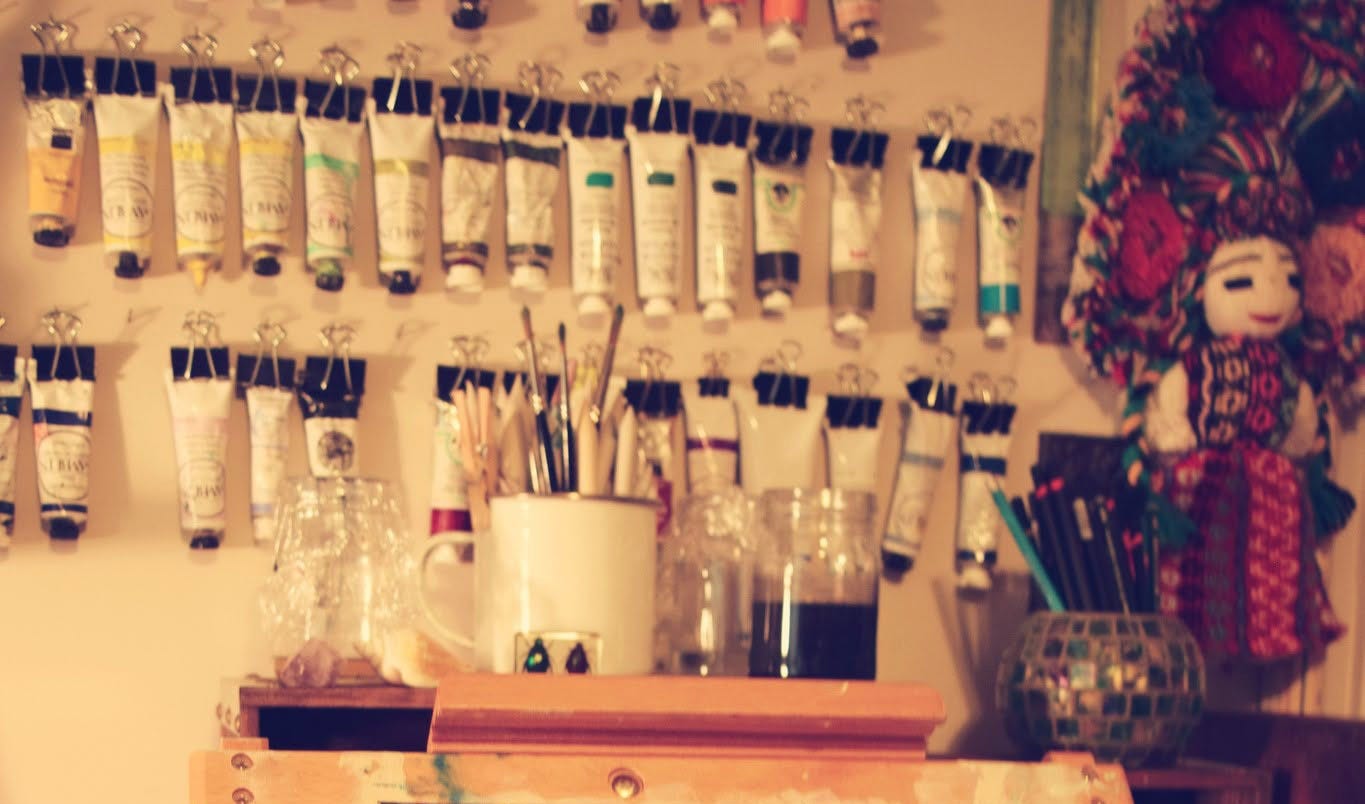
I spent some of my childhood in Mexico, but mostly I don’t remember it except the smell of fresh conchas and being held in various family members’ laps. I remember the flowers that seemed to be for sale or growing wild on every street corner of my great-grandmother’s neighborhood in Ciudad Victoria. I have a handful of mementos—a sombrero-wearing marionette, maracas, a folk art yarn doll that has permanently lived in my art studio for two decades, after she retired from being my comfort stuffie.
So my exposure to Frida came earlier than most, and ended up being a bond of pain and ugliness the likes of which few people really understand.
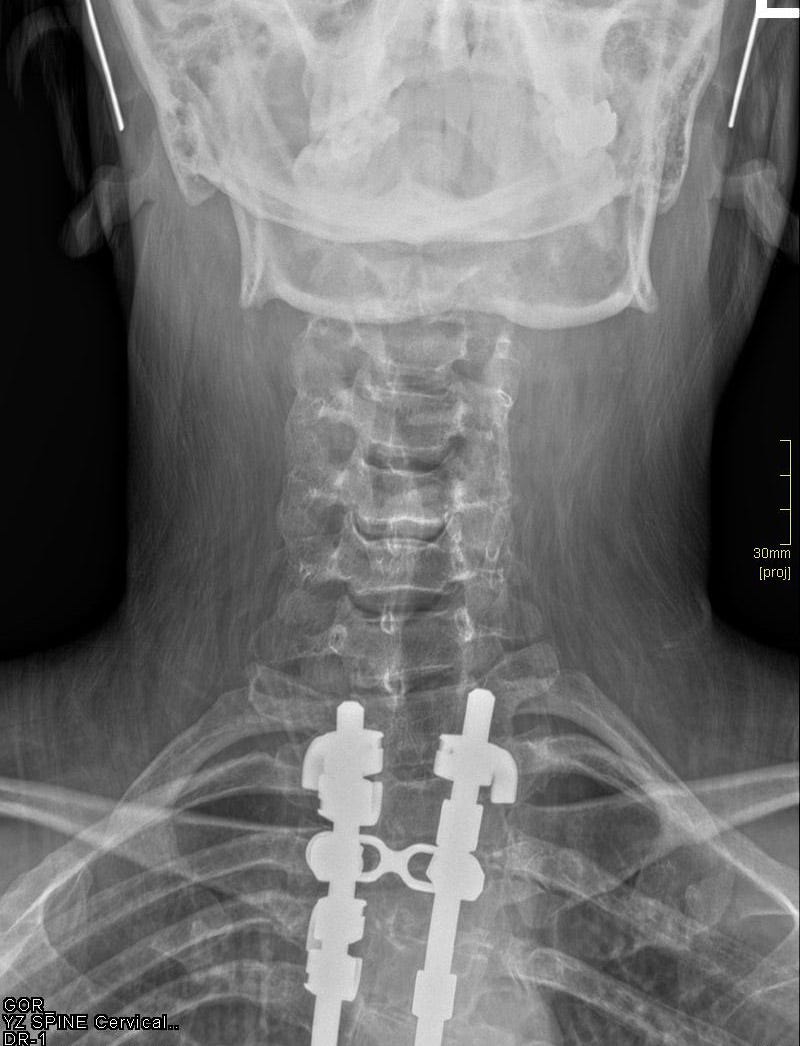
That’s my broken column, or part of where it is anchored. It extends to somewhere around the lumbar region of my spine, and stabilizes my spine and ribcage. It was experimental, the way much of Frida’s treatment was experimental. People like us aren’t supposed to survive, and the price for that survival is unfortunately a lifetime of pain afterward.
I’m only typing this today because of modern pharmaceuticals she didn’t have access to. But she and I share other unfortunate complications, and I still hope that I won’t lose my left leg as I get older.
(Also, I love that the x-ray picked up my hair and makes me look like some kind of furry animal.)
Frida captivated me because she wrote about and painted the ugliness without shying away. I was always told to keep quiet about it and stop complaining. No one wanted to be reminded that I was not a young, pretty teenage girl for their consumption and that I was, in fact, medically inconvenient, damaged, and rapidly descending mentally from the realities of my life.

There was one person who understood, but she was dead. She also left behind her writings and her paintings, and it helped me some to know there was someone, once upon a time, who understood: You’re deformed. Boys don’t want to date you because you’re dying. They don’t want to hold you because it feels like holding a doll—something lifeless and hostile as the buckles of the braces holding you together catch on their clothes and scratch their skin. The constant smell of rubbing alcohol and medical cleansers, not the smells of a teenage girl but the smell of a dying body. Wearing light clothes because you’re sweating to death inside a plastic skin, and clothes you don’t care about because your buckles will rip holes in them eventually. You pray every day that your clothes don’t rip during school, because then people will be able to see what they already know is underneath—that you’re not like them. You’re sick and doll parts, and not a real girl like everyone else.
A couple years ago I had the oddest experience. I was at the Las Vegas Licensing Expo, wearing one of the many hats I’ve worn, to discuss and sign off on import/export and manufacturing deals in the giftware market. I was an award-winning illustrator, you see, and my art was licensed, manufactured, distributed, and sold on every continent except Antarctica. It still is, I just don’t actively travel and pursue those deals anymore.
The whole trip to Las Vegas was really surreal. My first night in town, everyone with a penis pissed on a chunk of the Berlin Wall. My autistic son was obsessed with the antique collection inside a casino and wandered onto the floor, which got us in trouble, until the security guard understood he was hyper-fixated on seeing the antiques, and then we got a tour from a part-time security guard, part-time martial arts master, that culminated in the attic of a casino where Winston Churchill’s pool table was hiding.
We also went to Meow Wolf, which defies any kind of description. When I travel, I always do the weird stuff first, and Vegas has tons of weird stuff.


And then the Licensing Expo started, and it was like someone grabbed the surrealism knob and cranked it to 11.


I was greeted by giant Pikachu hanging from the ceiling. I stood beside this Pac-Man TV thing and met with execs from a tabletop gaming company. I visited Kool-Aid Man and hunted the Tapatio man, looking for a commemorative keychain to take home to my husband.
See, at the licensing shows, big brands of all kinds come out to hand out swag bags and small items. I wanted that fucking hot sauce keychain so bad and couldn’t find one, so when a thousand people walked past my agent’s booth with Frida bags, I had to know where those came from and what was in them. A friend of mine, a world-famous Disney artist who knows more about art than I could ever cram into my head, told me where they were but cautioned me.
“It’s not really Frida. It’s kind of weird.”
I still ran across that expo floor to get my hands on that swag bag. I slowed as I approached the booth. Smiling people within it called out to me. I was dressed, in the words of another artist at our agency, “like you’re promoting one of those edgy streetwear fashion brands,” and all day people from fashion houses had been coming up to me to ask me where I worked (it was just a cheap button-down dress with a belt, combat boots, ripped leggings, and a chunky pearl necklace, but I guess it caught people’s attention). The Frida people seemed to think I worked for one of those companies too, and tried to hand me several swag bags to take back to my boss.
I took two and walked away totally disenchanted.
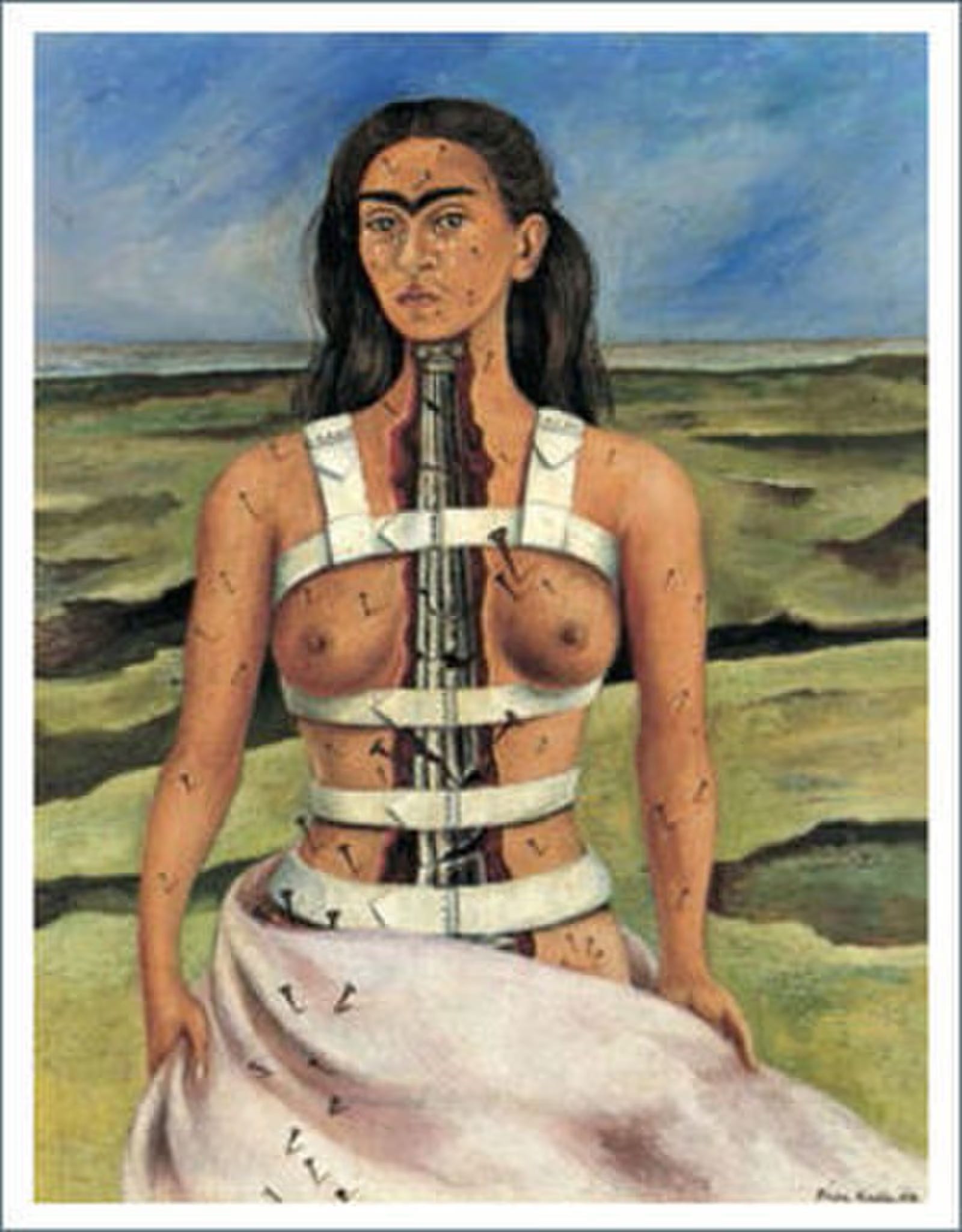
It wasn’t Frida Kahlo, painter of Broken Column.
It was Frida™.
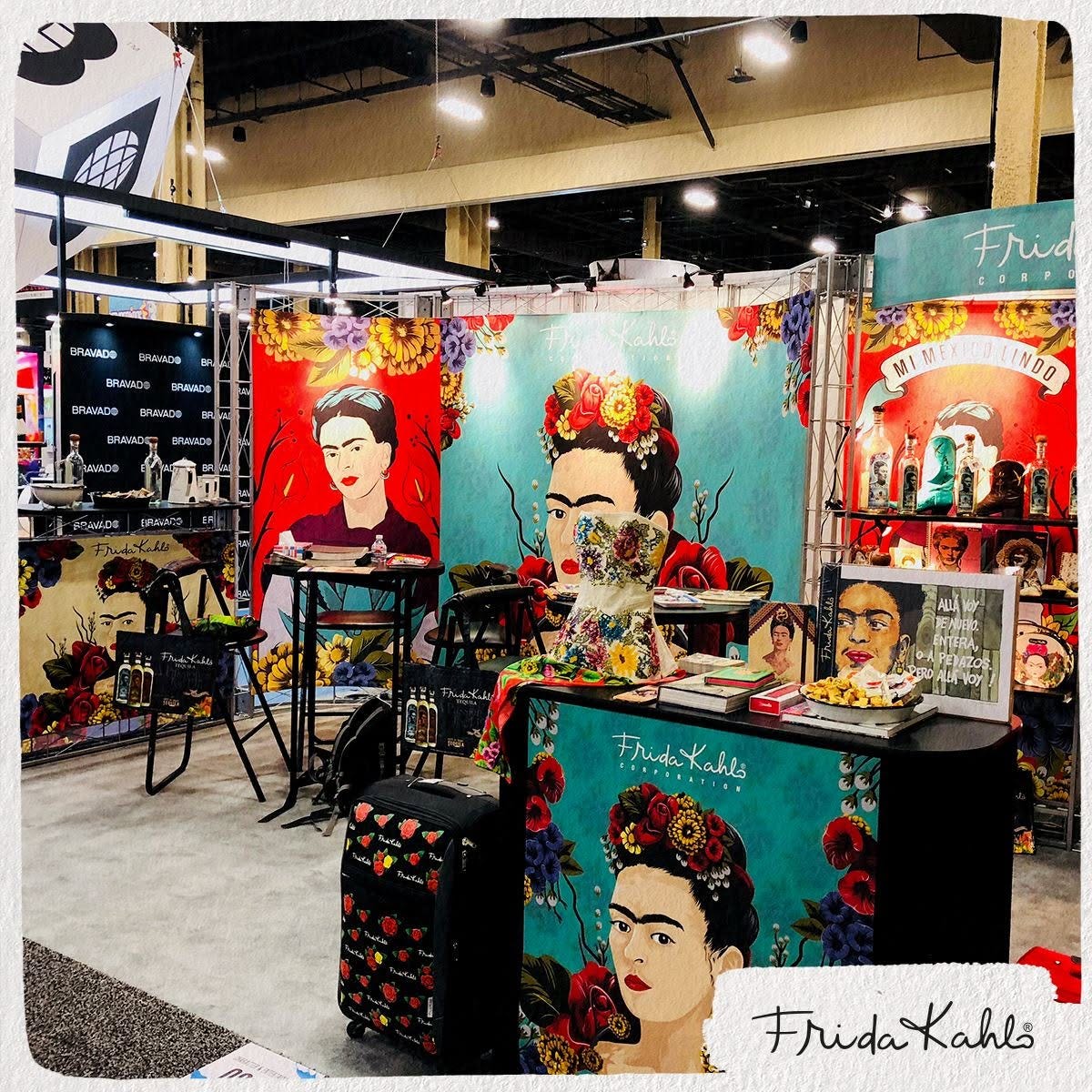
I ended up leaving early that day. It was almost a hundred degrees outside and I have cancer, so when I tell you that I wandered down the Vegas strip in the blazing afternoon sun wondering what the fuck was going on, I was kind of putting myself at risk. I ended up getting lost behind Mandalay Bay, where I sat under a palm tree and looked through the sad contents of my Frida swag bag.
There wasn’t any mention of Frida’s communism. It talked about what licensing Frida’s art could do for your brand, and all the things Frida had become a symbol of. A lot of the art wasn’t even Frida’s, but was approximations and portraits painted by living artists. Everything was carefully sanitized of her more disturbing paintings.
(Incidentally, I quit touring after this experience.)
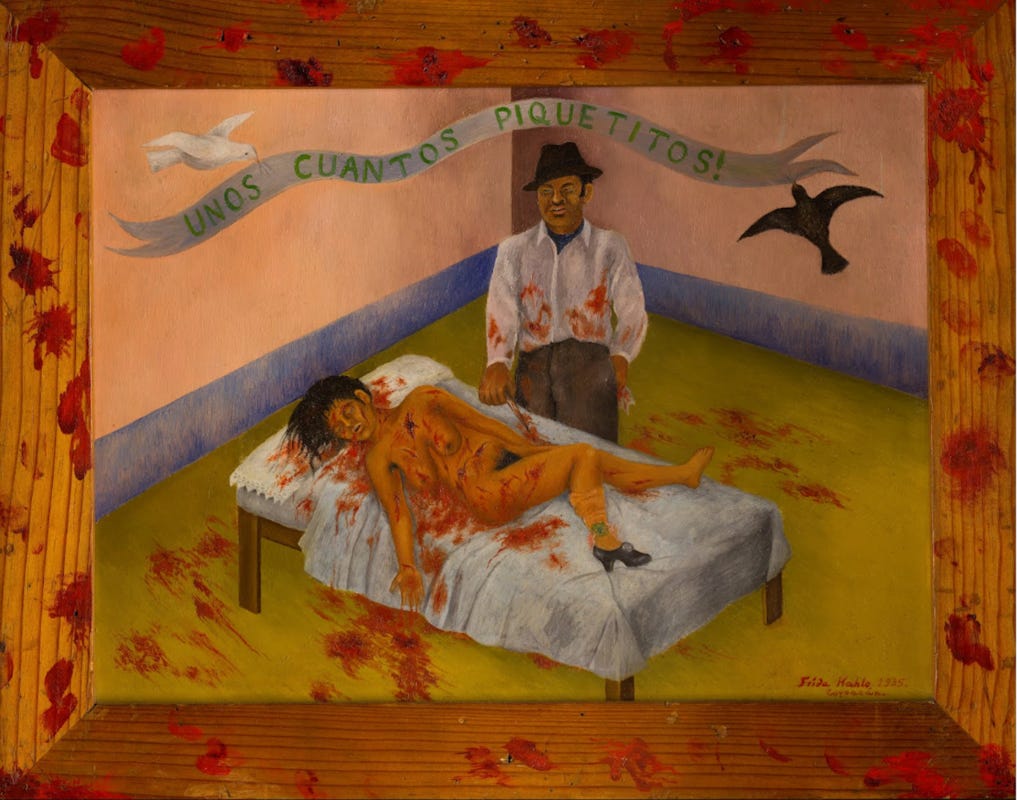
“A Few Small Nips”
It was Frida’s body, hollowed out. Frida, reduced to doll parts, like I often felt.
And who helped build Frida™?
Her own family.
It’s hard to describe the seductive qualities of communism in Mexico during Frida’s lifetime. Mexico was a place of great struggle. Workers’ rights were being trampled on, and the United States was constantly interfering and screwing around with Mexican politics. Communism came with appealing promises—worker rights, health for the ill, and a counterweight to America’s power.
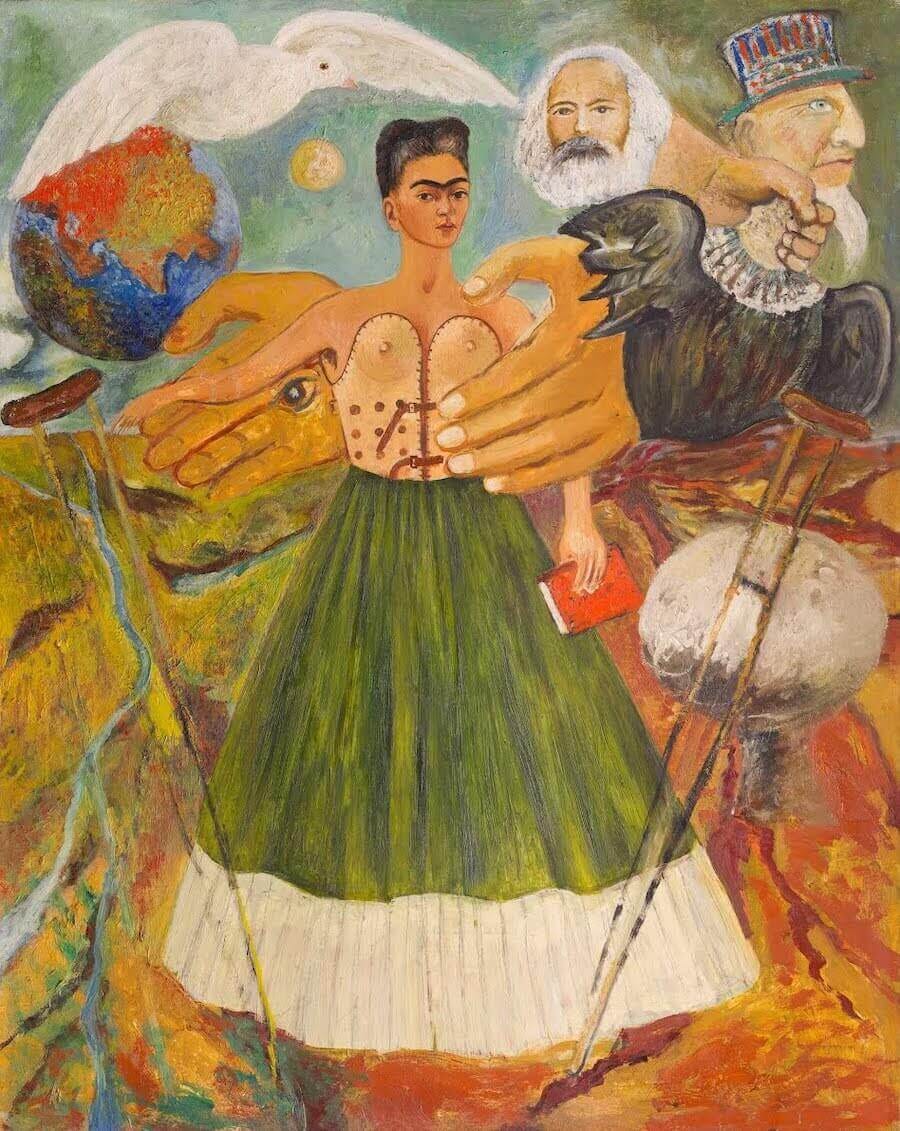
“Marxism Will Give Health to the Sick” — an alluring promise in a life of pain
Mexico’s revolutionary left was not a monolith. There were Stalinists, Trotskyists, independent Marxists, labor radicals, and revolutionary nationalists who fought bitterly over what socialism was supposed to look like in Mexico. So calling Frida a “communist” without elaboration is misleading.
I’m not going to sit here and dissect every falsehood in that article I linked, because I don’t think it’s worth the time. But it caught my eye and made me want to write my own thoughts down, so I’ll give it that.
Frida did have a brief affair with Trotsky in 1937. He was murdered in Mexico in 1940 by a Spanish-born NKVD asset. And eight years later, in 1948, Kahlo returned to the communist party after leaving in the 1920s. It was hardly a case of, “my lover was murdered, I’m going back to the villain!” It was a series of events that unfolded over a twenty-year span, for reasons that have nothing to do with who Frida was fucking.
There’s another pressure point here: We can’t pretend Frida possessed the same historical picture we do, a hundred years after the fact. It’s not that Stalin’s atrocities were unknowable in her lifetime, but we can’t pretend that her knowledge of them was the same as what we know today. It probably wasn’t.
It’s always like this when people try to write think-pieces about communism—they try to take a slice of it, isolate it from context and the global political temperature at the time, and tie it only to the worst people. But the Soviet state was working worldwide through the Comintern, from Iranian activism to Mexican artists, to sow the seeds of the communist dream.
In every place they tried to grow it, the environment was strikingly similar: Revolution, exploitation of rural and industrial workers, stifling government, incredible wealth disparity, inequality, violence, and resentment toward American meddling. The Soviet Union presented itself and deliberately cultivated an image of prosperity, land distribution, workers’ rights, education, racial and social equality, and freedom from foreign economic domination. It made communism attractive in post-revolutionary Mexico, where people who might have otherwise rejected Soviet authoritarianism embraced it for the greater good.
Understanding that context doesn’t excuse Kahlo’s later admiration for Stalin, but it is necessary to understand why Stalinism gained adherents in Mexico despite the brutality of the regime.
So, Frida Kahlo, the communist artist, died too young and, since her injuries robbed her of her fertility, she left behind no children. That left her surviving family to manage her art. A large portion of her work is held by Fideicomiso Museos Diego Rivera y Frida Kahlo, a trust administered by the Banco de México. The Frida Kahlo Corporation is partly owned by her family and partly owned by a Venezuelan businessman. The two entities have sued each other over the years over this whole issue: Frida Kahlo is a name that should belong to Mexico. Frida Kahlo was a human being with inconvenient political leanings, and whose inconvenience has been stripped away from her to make her a commodity for tote bags, t-shirts, and a 244-unit development of Frida Kahlo luxury condos in Miami.
Frida Kahlo, the communist concerned with workers’ rights, is now on Shein’s mass-produced, sweatshop clothes.
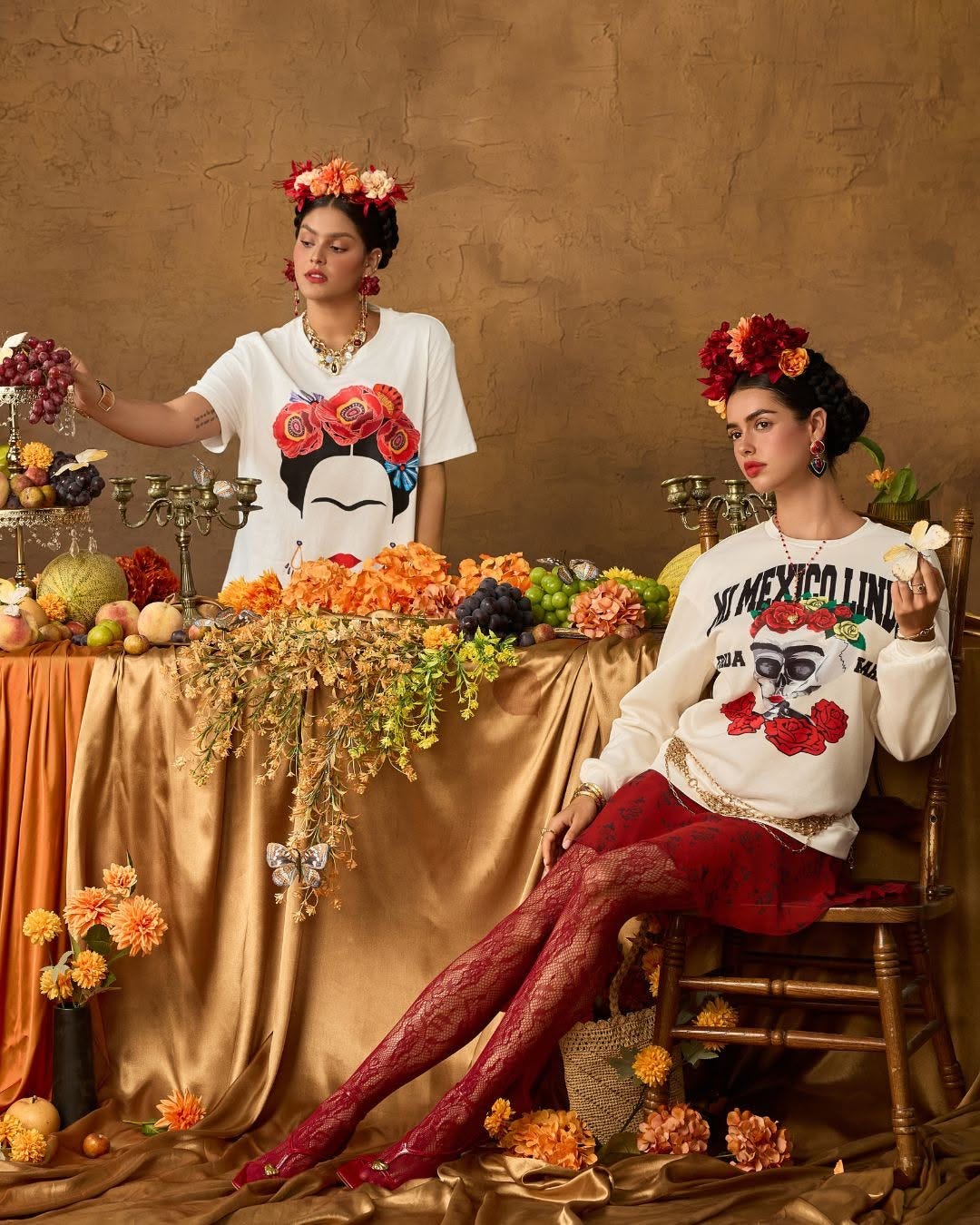
And Kahlo’s surviving family is left trying to fight the monster they created in order to try and honor and restore the memory of the WOMAN, including all her ugliness and inconvenience, which was stripped from her not by fucking FEMINISM, but by CAPITALISM.
It is actually pretty anti-feminist to remove all the unmarketable bits of a woman’s personality in order to sell her soul long after she’s dead. It’s a pretty damn misogynistic move, actually. And to me, it’s part of another larger issue—the commodification of Mexican folk art to sell it to people who don’t know the history of it at all—people who won’t know to question Frida being presented as an isolated slice of communism, and who will shame and abhor her with a hundred years of hindsight on their side.
So, dude—I don’t really care if you don’t think I’m a polymath or that you would like to reduce me to just another woman telling you you’re wrong. What bothers me is that you managed to write an entire condemnation of Kahlo’s commodification while not being historically literate enough to understand who actually commodified her.
What I do care about is that people continue to defame and cut this woman into parts to sell whatever it is they’re shilling—tote bags or the Red Scare—every day it’s something new.
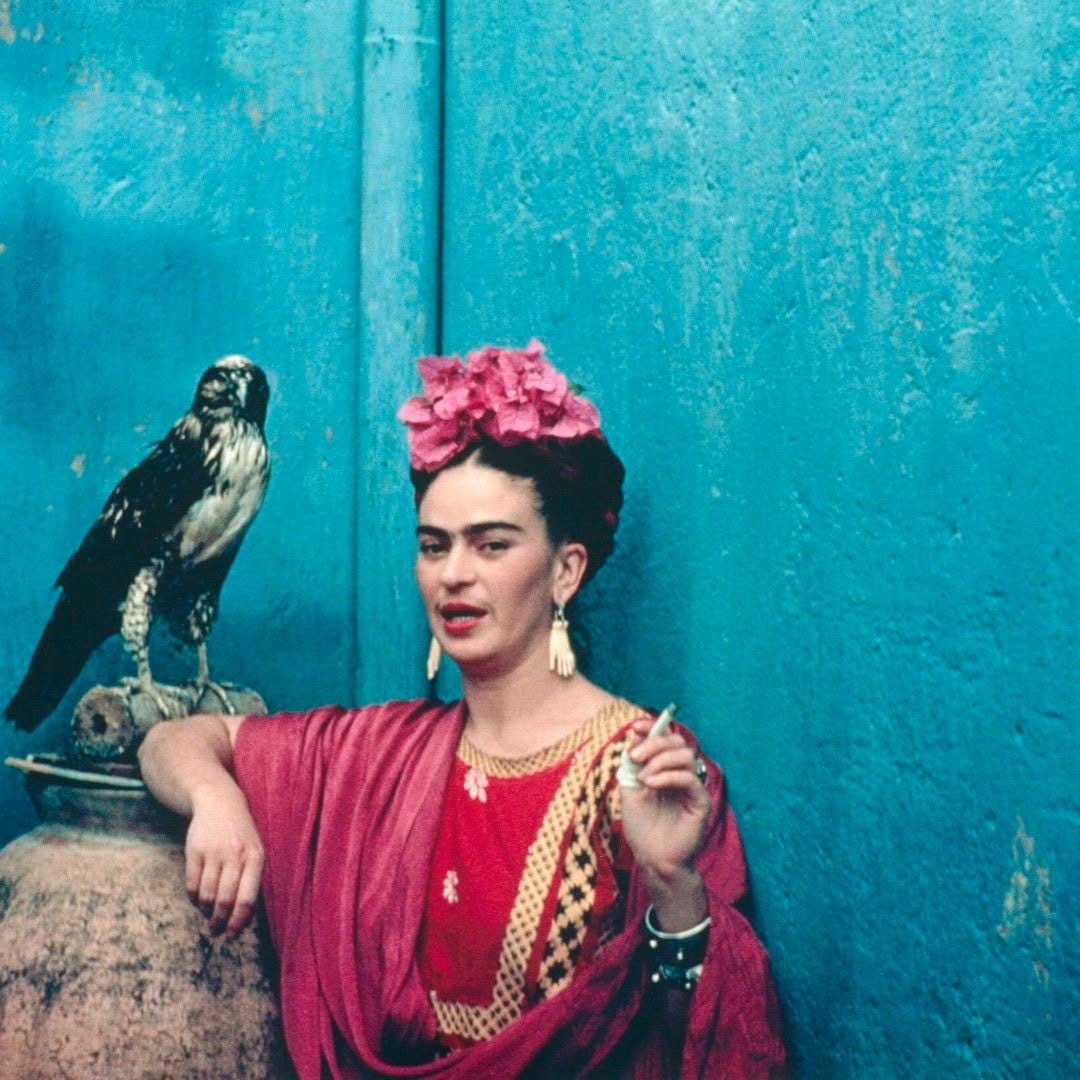
Unos cuantos piquetitos. Just a few more nips, darling.
Leave a Reply